
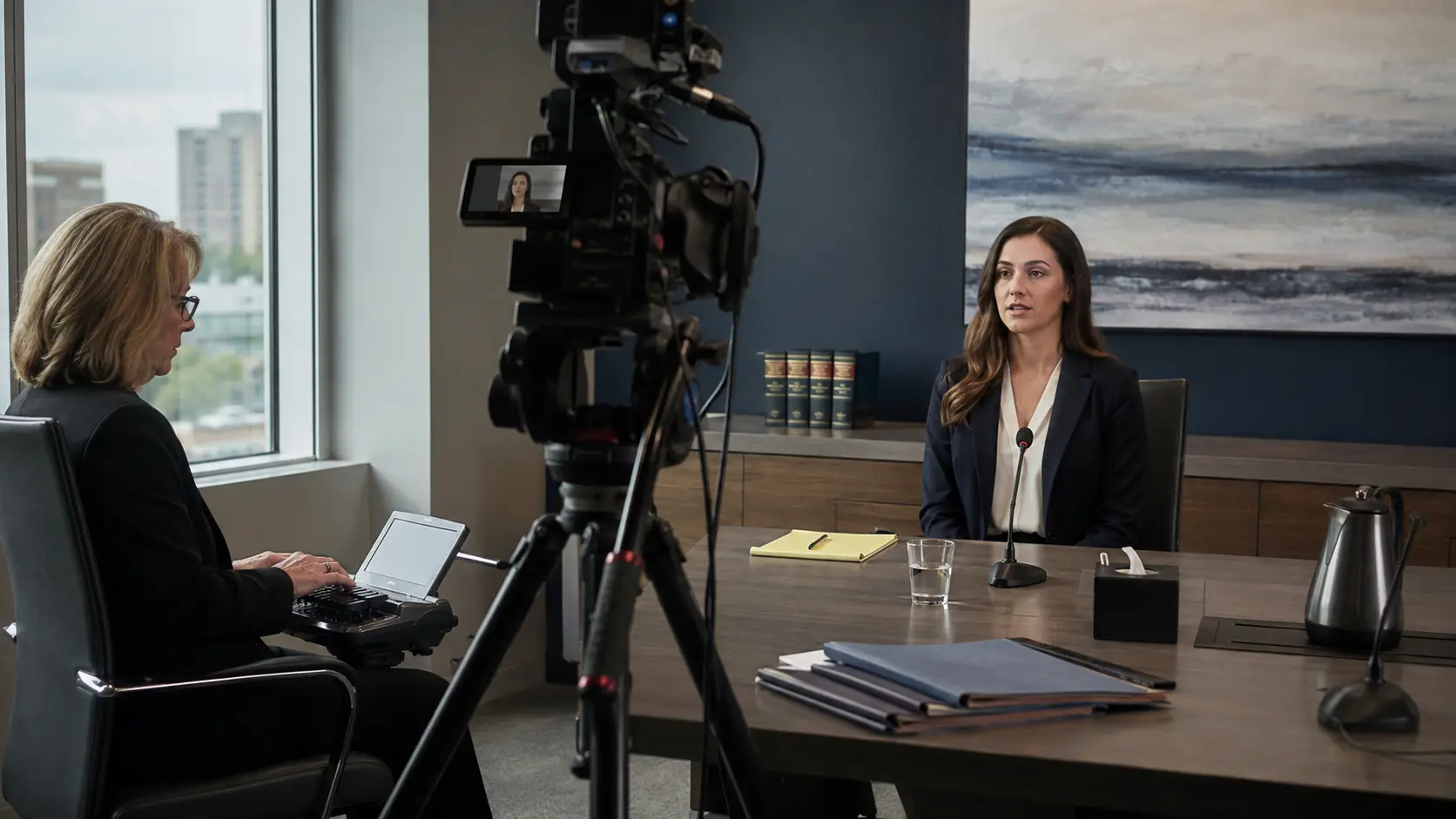
Professional video deposition services built around the proceeding.
Video deposition recording coordinated with the court reporter and official transcript for in-person, remote or hybrid testimony. CourtReporting.com works with law firms, attorneys, corporate legal departments and litigation teams that need a clear scheduling path across different cities and jurisdictions.
The recording, reporter and transcript should follow the same schedule and proceeding information from the beginning. Our scheduling team reviews the location, date, format, estimated duration and requested deliverables before routing the assignment. That practical review helps keep the service connected to the matter rather than treating it as an isolated transaction.
When this service is commonly requested
Video Deposition Services is commonly used for testimony preserved for trial, unavailable witnesses, expert examinations, remote witnesses and matters where presentation quality affects later use. The correct setup depends on the actual proceeding, applicable rules, participant locations and deadlines. Providing those details early gives the scheduling team a better basis for reviewing coverage and connected services.
One request can connect the full record
A reporting assignment may also require realtime access, a remote or hybrid platform, legal videography, interpreter coordination, exhibit handling, a rough draft or expedited transcript delivery. Those needs can be submitted together so the team can consider the proceeding as a whole.